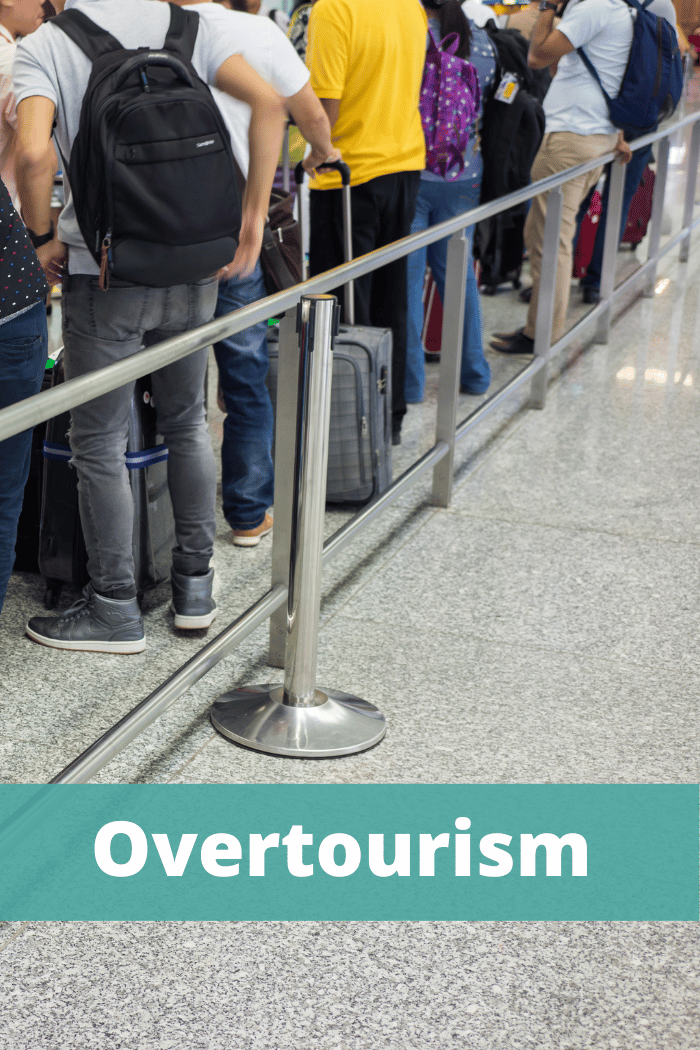
Overtourism is a buzz word of late, but not a good one. We’ve all read about the cities and regions being overrun by tourists, who might be damaging natural or historical sights, or making an area unaffordable for its original residents to stay in. In this episode of The Thoughtful Travel Podcast, I speak with three guests with an interest in overtourism and ask for their thoughts.
First up, I speak with Dylan Thuras of Atlas Obscura. Dylan’s whole website and podcast are based around encouraging people to learn about, and visit, less popular, more obscure places, so he’s been thinking about overtourism and its opposite, undertourism, for many years.
I then chat with Jamie Burr, who specialises in marketing for responsible tourism businesses, and therefore also has a significant interest in overtourism and how we might deal with it.
Finally, Chris Christou from The End of Tourism podcast talks about some future alternatives for tourism, speaking from the example of his home of Oaxaca in Mexico, that may be one way to mitigate the problems of overtourism.
Links:
- Dylan Thuras – Atlas Obscura podcast
- Jamie Burr
- Chris Christou – The End of Tourism podcast
- Join our Facebook group for Thoughtful Travellers
- Join our LinkedIn group for Thoughtful Travellers
- Sign up for the Thoughtful Travellers newsletter at Substack
Unedited episode transcript:
Amanda Kendle 0:00
This is the thoughtful travel podcast. I’m your host, Amanda Kendle of the not a ballerina.com, travel blog. Every episode, I’ll share travel tales from several fellow travel lovers, and together, we hope to entertain and inspire you, remind you of some of your own great travel experiences, and encourage you to hit the road again soon you
Hello and welcome to episode 333 of the thoughtful travel podcast today we’re talking about over tourism. Before we begin, I’d like to pay my respects to the Whadjuk people of the Noongar nation where I’m recording this podcast. And in fact, this area is a really interesting place to consider when we talk about overtourism, because really, we have never suffered from it here, and I hope we don’t. So here in Western Australia, we’re lucky in this respect, to be very distant from most parts of the world. And I’m fairly sure that for this reason alone, we have remained safe from the impacts of over tourism. Because I am sure we have the we definitely have the natural beauty that would suffer or certainly be privy to many, many tourists if we were more easily accessible. In fact, actually remember when I walked the cape to Cape track in the southwest of Western Australia, with my friend Catherine, and I said to her as we walked, at one stage, if we could transpose that strip of coast over to Italy or somewhere, you know, kind of more central in the world, it would have been overrun and over developed years ago, decades ago. But we were there, here on in Western Australia, walking for hours and often seeing nobody else along pretty undisturbed natural coastline, and seriously, some of the very best views on the planet. So it’s interesting. However, obviously, overtourism has been in the headlines a lot more in the past few years. I think it really started to make its mark. You might remember during the first year of the pandemic, when the lack of tourists in, especially in really over touristed places, made a big difference. So suddenly, having no no visitors, nobody there, made it really clear to people what the negative impacts of tourism had been for a long time. You know, the sky the water were all cleaner and clearer. Wildlife came back in abundance, lots of, you know, all sorts of lovely consequences, however, that I think was in most of these places, closely followed by revenge tourism. I really don’t like revenge tourism, but it seemed to be really strong post pandemic. It was that kind of see it now, in case we never can see it approach, basically a pretty selfish kind of self centered approach, like, I deserve to travel and I’m going to see these places now, just in case I can’t, you know what, if another pandemic happens or something else. Yeah, so not great, but over tourism seems to be getting more, I don’t wanna say positive headlines, but more people seem to be thinking about and paying attention to it. I literally just typed the word, just the word over tourism, into the news search on Google, and even within the last few days, as I speak, there have been newspaper articles published, like numerous published about over tourism. For example, in Bali, where too many tourists are leading to a bunch of waste and rubbish issues. Or over tourism in parts of Japan, they talked about an onsen town where they’re now starting to limit entry. Numbers that the hotel taxes in Kyoto were being increased, etc, and a bunch of topics from European over touristed spots as well. And that was just stories from this week. And if you keep reading, there’s dozens or probably hundreds of different measures that over touristed places have implemented in the past two or three years. And I am starting to hear tourists say, hey, maybe we should go somewhere else, because this is no fun. So today I have three guests talking about this, I think, very important topic. My first guest is Dylan turus of Atlas Obscura. And I guess, by its very nature, Dylan’s site and podcast, Atlas Obscura is the opposite of over tourism, because a place that’s obscure is, I guess, by definition, not an over touristed place, or it wouldn’t be obscure anymore. So consequently, Dylan had a lot to say on this topic of overtourism.
Dylan Thuras 4:36
I feel like for the last 10 years it’s been people have known it’s been happening, and I think what’s changed is there’s a lot more active intervention. It’s like, Look now you got to pay money to be in this city during this period of time. Like, how many different time of year come during the low tourist season? Maybe you don’t have to pay the and it’s usually like 12 bucks or something. It’s like such a small one. Amount of money that like anyway, so I but I always pair, because of what we do at Alice obscura. I always pair over tourism with its less famous, but I think no less real cousin, which is under tourism. I guess I’ll explain what I mean by this, which is like, you know, in Venice, during high season, 60,000 people come per day. And Venice has a population of 55,000 residents. There are more. And it’s just it’s
Amanda Kendle 5:29
often horrific sounding doesn’t and it’s such a
Dylan Thuras 5:33
bummer for the tourists too. Like, I mean, it’s like everyone is having a bad time, like the residents are unhappy, the travelers are miserable. Yeah, they’re like, doing the bucket list, and it’s just like the worst possible experience. And then, you know, 20 miles out of town there is probably some unbelievable place, whether it’s a museum or vineyard or whatever, you know, that that is dying for more attention. And so I see this, like, even within cities like, this is an example. This is in Florence. There’s the Uffizi, very, very famous art museum, you know, Venus on a half shelf there. There’s always, like, a three hour line outside, and it’s mostly tourists who, like, they know it’s a thing they should do. Yeah, I’m not positive that most of the people in line know quite what they want from that experience. But you know, like that’s, don’t wanna miss out, won’t miss out, and then, like a 10 minute walk, like a 10 minute walk over the Ponte Vecchio, up a little bit into a slightly more residential neighborhood, I guess, is this museum called La specula, which is one of these collections of wax anatomical models and very early taxidermy that usually has like a handful of people in it, and it is just the best. And so I have seen so many small museums, you know, outsider art projects, visionary art projects, get destroyed, fall into ruin, get closed down because they can’t get enough people through the doors at the exact same time that you’ve got these places Barcelona, Venice, you know, Tulum, that are just like drowning in people. And even within those cities, they’re usually in like three places, kind of, you know. And so for me, these things go hand in hand, because it’s not just about sort of like tourism bad. I don’t think that’s true. I think tourism is incredibly powerful force. I think you can do enormous amounts of good, but you have to figure out how to effectively disperse it. That’s, to me, the ultimate thing. And I feel like one of the things that where Atlas Obscura came out of was travel media just has this very intense pattern of dog piling. You know what I mean, someone writes an article about Tulum. It’s the hot new place. Someone else writes an article about Tulum. Everyone does their glossy spread, whatever. And by the time this has gone through, you know, all of the channels and the social media, and you know, people show up downstream of that, of that media. And it’s the place is just absolutely hammered, you know what I mean? And stuff’s expensive, residents are upset. The quality of everyone’s life and the experience of the tourists has been diminished. So that’s not good. That’s like a lose, lose exactly, you know? And like, there are, there are. It’s not, yeah, it’s not even residents versus travelers, because when that happens, the travel experience genuinely gets hugely degraded, exactly? Yeah, so I, for me, it’s just a huge question of, how do you make how do you kind of mythologize new places, new cities, new individual locations within a city, different countries? How do you just keep reminding people that travel can be a very anxious experience. People don’t have a lot of vacation time. They want to do it right. They’re spending a lot of money and all that anxiety really drives people towards sort of checking the boxes, right? And how do you give people permission to check different boxes? You know what I mean? To just go at a different time of year, spend, maybe stay a little longer in one place so you can explore the outskirts or farther away more. You know you do. It’s okay if you don’t see every kind of famous site and you do some other stuff, so I don’t know how to sort of giving tourists that confidence and that permission structure, yeah, to do dispersal, making new stories so that there’s just new stuff to get excited about, and then if those things get crowded, making new stories like that’s that, that feels like it should be the work of travel media, and I don’t know that it always is. And so I, you know, that’s like an important for me, yeah? I just, I think about those things as distinctly tied, you know, over tourism and under tourism. Yeah, you’ve got this powerful tool. Use it to do good. The world
Amanda Kendle 9:37
is enormous. There are so many different places we could be visiting,
Dylan Thuras 9:40
yeah, but endless. Really endless,
Amanda Kendle 9:43
absolutely endless. Like there’s enough space in the world for us all, because we all inhabit the world. We just need to try and find, I mean, your work and my work are just coming at the same problem from different angles. So, you know, trying to get people to be thoughtful about where they’re going. And for example, why are they standing. In a three hour queue. Is this a place they really want to see, or is it just the FOMO of everyone will expect me that I’ve, you know, been to Paris. I must go to the Eiffel Tower. But do you do you must go there? Like, yeah, let’s see. Like, you know, what other things we could be doing? Maybe we don’t even really go to Paris. There’s a whole country, and, you know, the rest of France is not full, and there’s so many other experiences you could be having, and you could have two weeks in a beautiful little village in France and be fulfilled entirely from that
Dylan Thuras 10:28
you would be so much happier. But people don’t go to places that they don’t know anything about, that they don’t have any hook to hang a vision, a dream, a plan on you know,
Amanda Kendle 10:44
good point. So personally, I love seeing all the other stuff, the non mainstream stuff. But as Dylan points out, we in the media need to continue to educate and persuade travelers that they’re not missing out by doing this, but actually getting a better experience. So my next guest is Jamie Burr, who is a marketer with a special interest in responsible tourism. So obviously he has thought a lot about over tourism as well.
Jamie Burr 11:09
It’s been this, this, this issue that’s kind of been simmering over the last, I’d say, a couple of decades, really. You know, tourism has been something that’s not often been managed or managed that well. And now, you know, sort of come to this tipping point where you see cases like Barcelona, Bali, Amsterdam, all the kind of poster children of over tourism starting to to bite back, you know, with protests and things like locals and residents in Barcelona marching down the street saying, tourists go home squirting people with with water pistols, which I’d actually love to have been part of that either, either in the protest or sat down in one of the restaurants, just, just soaking, yeah, observing, yes, yeah, yeah. Every tourism is really, really, I spoke about it actually, in this trends art. We wrote recently with better roots collective about how I’m kind of predicting that hopefully is going to trigger a kind of response, because, you know, the average tourist, the average traveler, doesn’t really have that much awareness I think of sustainable travel. I mean everything that it encapsulates. When people think of sustainable travel, they think, oh, planting trees, or all the ecological, environmental stuff. But now, with over tourism sort of coming to a head, I think people are starting to become more aware of the social impact, you know, how poorly managed tourism is affecting local areas. You know, things like Airbnb, for example, pushing up rental costs and things like that. It’s obviously a bad thing over tourism, but I think it’s also a good thing that these stories are now coming, you know, into the top story seeds in my BBC News app, for example, like tourism protests in Barcelona. You know, that’s something going to get, of course, the awareness of if people like the BBC are talking about it, or other news organizations just putting it into people’s consciousness, because I think that’s a huge challenge that we’ve got in sustainable tourism. Is when I speak about sustainable tourism issues on LinkedIn, you get lots of engagement and things saying, this is brilliant. I’m 100% behind you, Jamie, but it’s kind of like a vicar preaching to the choir. All of those people commenting and engaging. Already know those things, and it’s, how do we how do we communicate those things to the masses and make actual real change, you know, transform those attitudes and intentions into real action and behavior. You always see people talking about that attitude behavior gap in tourism, and it’s a tricky one, because, you know, compared to different industries, you know, finance or or just just as like buying a t shirt, you know, buying a organic t shirt or a second hand t shirt is a lot, lot easier than doing a responsible holiday. Because, you know, you might have been environmentally friendly throughout your year. You might have eaten more plant based food, for example, done more recycling. But at the end of the year, you think, God, haven’t I behaved well, haven’t I worked so hard? I deserve this holiday, and I’m just gonna throw the gloves off and act like a hedonistic teenager, like it’s the last days of Rome or something, and
Amanda Kendle 14:16
I deserve to go to Barcelona or Venice or wherever that’s already busy because I’ve always wanted to go there. So why should I miss out
Jamie Burr 14:23
exactly, exactly the average person doesn’t care about politics, and I don’t think the average person cares about sustainable tourism, but we need to make sustainable tourism something that people want to do and think of as less of a burden, like make these train travel journeys across Europe, these amazing things, you know, backpacking. I’ve seen an article published by one planet journeys today speaking about how backpacking is this amazing, immersive way to travel and experience local cultures and connect with people, because that’s the thing that. You know, if you dig down deep into what people really want, people don’t want tours. They don’t want they don’t want a hotel stay. If you dig deeper and deeper from the tour level to what the tour offers, like local foods and things like that, the thing that you get to in the end, I think, is memories and these great stories that you can share with friends and family and tell your grandkids.
Amanda Kendle 15:22
I so agree. And these great stories and memories happen much more frequently when you’re, say, traveling slowly or away from the main sites. And I suspect you don’t really remember many stories about waiting in a four hour queue of tourists, or if you do, they’re not positive ones. Now my final guest today is Chris Christou from the end of tourism podcast. Now we started off chatting about digital nomads, people who move from their home country to work online from elsewhere, somewhere, usually cheaper than their home country. Chris has been living in Oaxaca in Mexico for many years. And so we then chatted about overtourism In general, starting with some discussions that Chris has had in Oaxaca about this,
Chris Christou 16:06
when people ask me here, what do we do? I say, Well, you know, we’re pretty confident that in a place like Oaxaca, the government is not gonna do anything, and even Anyone who attempts to become a part of the government will fail miserably in their attempts to limit these things. I mean, even in Barcelona they I don’t remember the name off the top of my head, but the current mayor, who’s who’s been mayor since 2015 she won the ticket based on limiting the tourism industry and regulating the tourism industry, but they’ve had very little success in doing so. And so in a place like Oaxaca, we know that that’s impossible, sure. And in a place like Oaxaca, there is this long, long history of grassroots movements. And so I tell people, you know, well, first of all, you need to organize, and it’s probably best to start with forums in person, forums on a neighborhood level, right with the people in your neighborhood? Because maybe 1020, years ago, when these movements were much stronger, that you could do this, and you could perhaps find a way of coming to the consequences in a clear light and proceeding accordingly. But now, because of over tourism, or or tourism in general, gentrification, etc, you know, half the neighborhood is renting Airbnbs. Half the neighborhood are not, did not grow up in in that neighborhood, right? Or their or their foreigners, which is, you know, to say international foreigners. And so, you know, it’s been really great. In the last month, I’ve had multiple people come to me from, you know, kind of disparate parts of the city, politically and otherwise, and say so we’re planning, we’re planning to do this. We’re planning to put together a forum in a few different instances, in neighborhoods, so on a geographical, small geographical scale, and then separately, for example, in the art community. So people who don’t necessarily live together in the same neighborhood, but who share these same values, more or less or or lifestyles, seeing what’s happened, and you know, want to try to find a way to contend with this in a good way, and together and together, right? I mean, the internet and social media has created this, this way of separating ourselves, or being separated by virtue of our screens, in a way that, well, if someone uploads like a meme or commentary about the issue, then okay, they’ve done their job right. And if you, if you agree with the commentary, then you just hit the like, and your work is done right. And that’s all. It is, right? And so, you know, it also comes down to these things that, for to some degree, seem to have nothing to do with the tourists that’s arrived, but that are actively undermining our capacity to organize on a communal scale, whether it be a community in the sense of the neighborhood or particular lifestyle or craft in terms of community, so, you know, the art community,
Amanda Kendle 19:03
community or something, yeah, and from there, what happens next?
Chris Christou 19:07
Yeah, that’s an excellent question. You know, I think that what’s beautiful about having the possibility of having these forums is that whether it’s a particular neighborhood or a particular craft or community that the answers or solutions, if you want to call them, that might be very different, from neighborhood to neighborhood, from community to community. And this reminds us of the beauty of diversity within a place. And so, you know, when I started the end of tourism it was, is obviously a very provocative title, controversial perhaps, but you know what is the end of tourism? It wasn’t just like, oh, you know, it’s like, yeah, like, Let’s destroy the the industry, and everyone has to stay home, right? And it’s like, No, I never gave a particular definition. I gave. Perhaps options in the sense of, Well, maybe the end of tourism begins to look something like old time hospitality, right? Maybe the capacity for people to arrive in a place, or the capacity for people to invite others to a place, is based exactly on that, an invitation that doesn’t come from the Ministry of Tourism, that doesn’t come from the tourist industry or an agency, but comes from individuals living in or perhaps the community at large.
Amanda Kendle 20:29
Yeah, absolutely. It sounds to me like what you’re kind of talking about is the the opposite of mass tourism, and the idea that you you go somewhere because you already have some connections, or feel connected, or have, I don’t know, have found a friend, or, you know, it’s not, you don’t just go to tick off a list, which is, of course, my least favorite kind of tourism, and you put the horse before the cart instead of the other way around, and have some connections and experiences. And that’s why you go somewhere, because you already have this background, not just, oh, let’s go here, and let’s go to 10 cities in, you know, in three weeks or whatever. Perhaps that’s I’ve I’ve oversimplified,
Chris Christou 21:08
but no, I love that. I love that, you know, I asked people this from time to time, and I say, like, what if you could only travel based on an invitation and and not just from your Airbnb host, right? But that there would, there would be in your manner of proceeding, not just that, not just in the place, but before, like your approach to the trip itself, before you ever leave, that this is, this might very well be about hoarding relationship, building friendships, you know, across borders and solidarity as well, with the with the issues that are that people are contending with in these other places, because at the end of the day, you might very well find that the issues that they’re facing are not that different from the ones you’re facing at home, and might very well be part and parcel of the reasons for which you so dearly want to leave a place.
Amanda Kendle 21:58
We got quite philosophical there, but it is really interesting to speculate how tourism might be very different in the future, and especially if it resolves some of the issues that we’re facing now, for example, with over tourism. Anyway, thanks so much for listening to Episode 333 of the thoughtful travel podcast, as always, a really big thank you to my guests. We started off chatting with Dylan tourists from Atlas Obscura, and you can find the podcast Atlas Obscura in all your podcast apps, or at Atlas obscura.com/podcast I then chatted with Jamie Burr, and you can find out all about Jamie and his work in marketing responsible tourism at Jamie burr.com and finally, rounded it off with a chat with Chris Christie from the end of tourism podcast. And similarly, you can find that podcast on all your apps, or go to the end of tourism.com don’t forget to come along and chat in our groups as well. You can find either the Facebook or LinkedIn groups for thoughtful travelers, either through the show notes or just search for thoughtful travelers in those platforms. And our sub stack newsletter thoughtful travelers has is coming out a lot more regularly now. So up over to thoughtful travel dot sub stack.com to sign up if you haven’t, you can also, if you want to support the podcast in any way, sign up for a paid subscription there at five us, dollars a month if you want to show some financial appreciation for the work of the thoughtful travel podcast. And thank you to those who have all of those links and more are in the show notes, and for this episode, you can find them at not a ballerina.com/ 333, as always. Thank you so much for listening. This has been another episode of the thoughtful travel podcast. Show Notes and other information are at not a ballerina.com/podcast join me again soon for another chat about why we travel. Bye for now you.
You might also like:
 Seoul Trip Report: Spontaneous Budget Travel to South Korea – Episode 378 of The Thoughtful Travel Podcast
 Overtourism and What We Can Do About It: Episode 379 of The Thoughtful Travel Podcast
 Introducing The Thoughtful Travel Podcast: Episode 0
 The Thoughtful Travel Podcast: Episode 1 – Food in a Foreign Language
Leave a Reply