Should we ride elephants? (For me, the answer is definitely no.)
But did you know that at one stage, the offering of elephant rides was seen as being part of “saving” them from a tortuous life working in the forestry industry, dragging heavy logs around?
And did you know there are now thousands of domesticated elephants in Thailand who still need to be supported, somehow?
While I always strive to be an ethical wildlife tourist, diving deeper into this topic has proven to me it’s never as black and white as we think, and that many solutions to these kind of problems are best solved through empowerment and many discussions with the local people involved – and that this is not a quick or easy solution, but a better one for sure!
This is a special episode of The Thoughtful Travel Podcast – I’ve put it together as part of the requirements for the Certificate in Sustainability and Anti-Oppression in Travel, a fabulous course I’ve been studying through the RISE Travel Institute. The show notes below have a lot more detail about all of this!
Show notes: Episode 251 of The Thoughtful Travel Podcast
Ethical Wildlife Tourism: Elephants are Many Shades of Grey
This special podcast episode is actually part of the requirements for the RISE Travel Institute’s pilot program, a Certificate in Sustainability and Anti-Oppression in Travel. It has been a brilliant course, and I’ve loved both cementing some of the knowledge I already had on these topics and going much deeper with others. For this capstone project, I picked the topic of ethical wildlife tourism with a focus on elephant tourism, partly because it’s a subject I find important – my son has been wearing a T-shirt saying “ride bicycles not elephants” for years! – but also because the session discussing this topic in the RISE program really made me think twice about my black-and-white thinking. As with all things thoughtful travel, there are always nuances and multiple sides to the story.
A fun elephant encounter in Zambia
Some of this topic feels heavy-going, so I wanted to kick it off with one of my favourite elephant stories. Catherine Marshall told me last year about her experience in at Mfuwe Lodge in Zambia, where an eco-lodge was accidentally built between a river frequented by elephants, and a wild mango tree they like to gorge themselves on every November. The result: as Catherine stood trembling behind the reception counter, an elephant walked through the lobby! You can hear her story in full in the podcast episode, but she also directed me to a video demonstrating what can happen there – see below!
(There’s also another with a baby elephant falling asleep.)
Our love of animals
Hands up if you can think of an animal you love … I’m sure nearly all of you put your hand up! We humans have a huge interest in animals and this is absolutely the case when we travel too – World Animal Protection data says that a quarter of the annual one-trillion-dollar tourism industry is driven by demand for wildlife tourism; if you take a tour, 60% of tour excursions involve animals in some way.
I particularly like the model described in research by Joan Bentrupperbäumer (2005) which describes four different ways people think of wildlife in a tourism context – have a read and consider which ones are most like you:
- Dominionistic – we see animals as under the dominion of us humans – emphasis mastery/domination/control
- Utilitarian – we value animals for their ability to give us social, economic or psychological benefits
- Moralistic – we see the welfare and rights of animals as equal to the needs and desires of wildlife tourists
- Protectionistic – we want wildlife tourism to promote species conservation and preservation
The history of elephant riding as a tourist attraction
As I discuss on the podcast, I actually remember the exact moment I started to understand and think about the down sides of wildlife tourism (literally when my former student, Fanny, commented on this old Not A Ballerina Facebook post in 2014). I learnt more specifically about elephant riding from a blogging friend, Diana Edelman, and in particular from her detailed post on the truth about riding elephants in Thailand, which she wrote after working at Elephant Nature Park for a couple of years.
But going back in time: I learnt a lot from the journal articles and research which I’ll list below, tracing the history from when elephants were banned from use in logging in 1989. Suddenly, several thousand elephants (and their mahouts) were unemployed – and as an elephant eats 120kg-200kg of food a day, they were costing about US$80/day to look after – not in the average unemployed mahout’s budget, that’s for sure.
The Thai Elephant Conservation Centre was government run and one of the solutions of the time to deal with these “unemployed elephants” – and they began offering (and training others to offer) interactions for tourists like riding elephants, watching elephants paint or play musical instruments, etc. It was seen at the time as though tourism had “saved” the elephants.
But then people started understanding the awful process of “the crush” and breaking an elephant so that it can be ridden. In 2015, dozens of travel companies deleted elephant rides from their tours. This seemed like a huge win for animal welfare, but as the RISE session on elephants (and in particular, Daniel Turner from Animondial) pointed out, once again thousands of elephants were suddenly unemployed – perhaps this sudden boycott did more harm than good, at least in the short term. Research has suggested that other tourist activities elephants are now often used for, instead of riding, such as walking with elephants, painting and bathing, are actually more stressful for the elephants and sometimes a higher risk for tourists.
The way forward
So, what to do … there are still thousands of elephants who need to be financially supported for many decades to come. This suggests there needs to be a real systemic shift, and some government regulations and support. I think researcher Kontogeorgopolous summed it up best, even back before riding became a much less popular activity:
Considering the many hurdles associated with reintroducing elephants into the wild, the lack of remaining suitable elephant habitat, and the enormous expense involved with adequately caring for elephants, it appears that in the short term at least, the welfare of domesticated elephants in Thailand is best served by a combination of continued tourism demand and sustained pressure on camp owners and managers to move camps in a slightly more ecocentric direction.
(Kontogeorgopolous, 2009)
There are now numerous camps or sanctuaries across Thailand with rescued elephants – some of these sanctuaries are fantastic, some are sanctuary in name only and still offer engagements with elephants which are not within responsible parameters, and are basically just a business trading on the good name of proper sanctuaries (regular thoughtful travel reminder: do your research!).
So, possible solutions lie with really figuring out solutions from within – working with mahouts, finding both economic and eco-friendly/sustainable solutions to give both the humans and elephants involved – and externally in the form of better, science-based, governmental regulations. But also: education of tourists is important! The supply and demand equation is so important, so as thoughtful travellers, if we can vote with our feet and dollars and only support tourism businesses who are treating elephants ethically and providing sustainable solutions for the people and animals involved, that can have a big impact.
References:
(Some of these have been referred to only in the podcast, rather than above)
Bansiddhi, P., Brown, J. L., Thitaram, C., Punyapornwithaya, V., & Nganvongpanit, K. (2020). Elephant tourism in Thailand: A review of animal welfare practices and needs. Journal of Applied Animal Welfare Science, 23(2), 164-177.
Bentrupperbäumer, J. (2005). Human dimension of wildlife interactions. In D. Newsome, R. Dowling, & S. Moore (Eds.), Wildlife tourism (pp. 82–112). Clevedon, UK: Channel View Publications.
Cui, Q., & Xu, H. (2019). Situating animal ethics in Thai elephant tourism. Asia Pacific Viewpoint, 60(3), 267-279.
Duffy, R., & Moore, L. (2010). Neoliberalising nature elephant-back tourism in Thailand and Botswana. Antipode, 42(3), 742-766.
Flower, E. K., Burns, G. L., & Jones, D. N. (2021). How tourist preference and satisfaction can contribute to improved welfare standards at elephant tourism venues in Thailand. Animals (Basel), 11(4), 1094.
Kontogeorgopoulos, N. (2009). Wildlife tourism in semi-captive settings: A case study of elephant camps in northern Thailand. Current Issues in Tourism, 12(5-6), 429-449.
Links:
- RISE Travel Institute
- Catherine Marshall at Time To Wander
- Ben Pearson of World Animal Protection
- Diana Edelman’s post The Truth About Riding Elephants in Thailand
- Animondial – Build Back Better for Animals
- Join our Facebook group for Thoughtful Travellers
- Join our LinkedIn group for Thoughtful Travellers
Full disclosure: I was offered a complimentary place in the RISE Travel Institute’s pilot program, but my enthusiasm for it is only because I consider it a high quality offering that can play an important part in helping travel become a more thoughtful place.
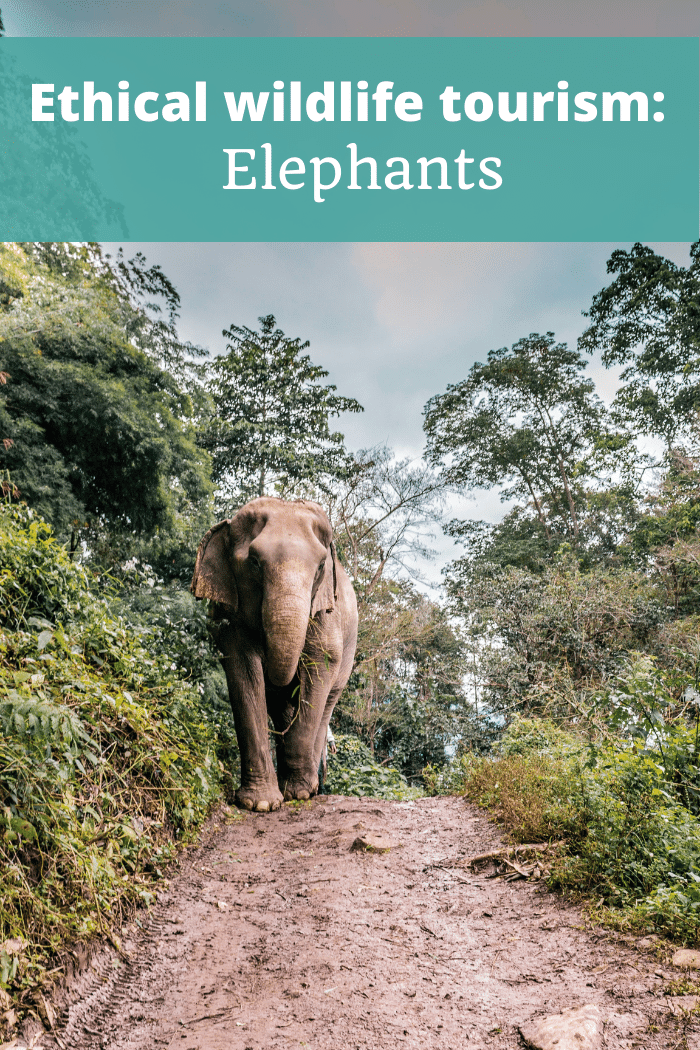
Photo of an elephant in Elephant Nature Park in Thailand by Deanna DeShea on Unsplash
You might also like:
 Travel and Foreign Languages – Episode 64 of The Thoughtful Travel Podcast
 The Kindness of Strangers on Your Travels – Episode 76 of The Thoughtful Travel Podcast
 Interviewing Amanda for the Two-Year Anniversary – Episode 90 of The Thoughtful Travel Podcast
 How Travel Changes Kids – Episode 94 of The Thoughtful Travel Podcast
Leave a Reply